
How do you recognise quality?
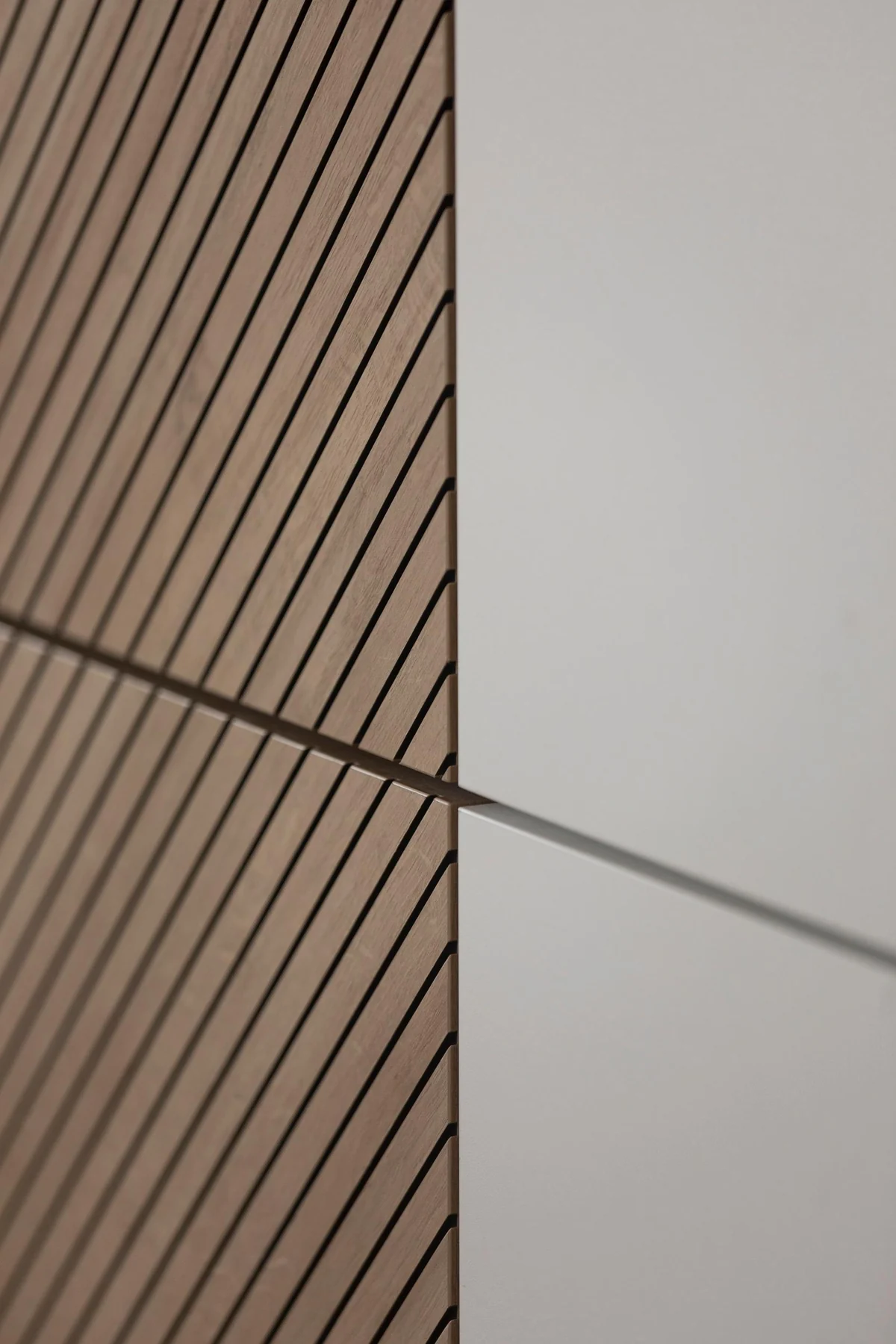
High-quality work presents a visually consistent surface, carefully resolved details and consistent colour, gloss and texture. Assess the part from its normal viewing distance and under light appropriate to its intended setting; raking light and different angles help us control the process critically. Small process-related variations may occur, but they should not disturb the overall appearance or function and must fall within market-standard tolerances.
- surfaces look and feel even;
- edges, holes, profiles and difficult zones are finished with care;
- joints, end grain and repairs do not show through in a distracting way;
- colour, gloss and texture remain coherent across related components;
- clear finishes enhance the wood without unwanted staining, clouding or sand-through;
- patina, texture and metallic lacquer vary deliberately within the agreed reference appearance.
Quality that appears over time
Adhesion, full cure, resistance to moisture and cleaners, colour stability and repairability only become clear in use. A convincing delivery photograph is therefore not enough.
What Morvena delivers
In consultation with the client, Morvena defines the intended quality level clearly in advance and monitors it through preparation, application, drying and final inspection. The application, technical requirements and any agreed reference together form the basis for assessment. We assess the result against the agreed reference and assessment conditions, taking the agreed use into account.
We can deliver any achievable quality level. We agree that level in relation to the substrate, intended use and agreed finish. Special visual or technical requirements are defined in advance. Our standard quality is high, and we make no concessions on it. When a project calls for exceptionally strict visual tolerances, we adapt the process accordingly. This generally requires additional preparation, several iterations, more labour hours and our most experienced specialists; we define such requirements in advance and price them separately.
| Finish | Recognisable final quality |
|---|---|
| Opaque lacquer | Even colour and gloss, sealed edges, carefully resolved details and a visually consistent surface. |
| Clear finish | Clarity, controlled pore filling and protection without suppressing the character of the wood. |
| Stain | Even colour development while retaining grain, figure and depth. |
| Oil | Uniform saturation, a natural feel and complete curing without residue. |
| Patina and effect | Lively but controlled variation within the agreed reference. |
| Vulkan | A continuous metal skin with controlled texture, patina, sanding pattern and protection. |
Why specialist work goes further
The difference is not necessarily more coats, but better decisions about substrate, preparation, system, film build, drying and inspection, together with controlled working conditions: a low-dust coating area, stable temperature and airflow, and lighting that enables critical inspection. Morvena maintains those controlled working conditions, brings the necessary choices forward, controls the agreed reference and protects the result during the work and storage at the workshop.
Quality and sustainability reinforce each other
A well-prepared component with a suitable finish lasts longer and can, where needed, be touched up locally.
For patinas and hand-worked effects, repeatability means a consistent result within agreed variation, rather than an identical pattern on every component.