
Beyond A, B or C brands
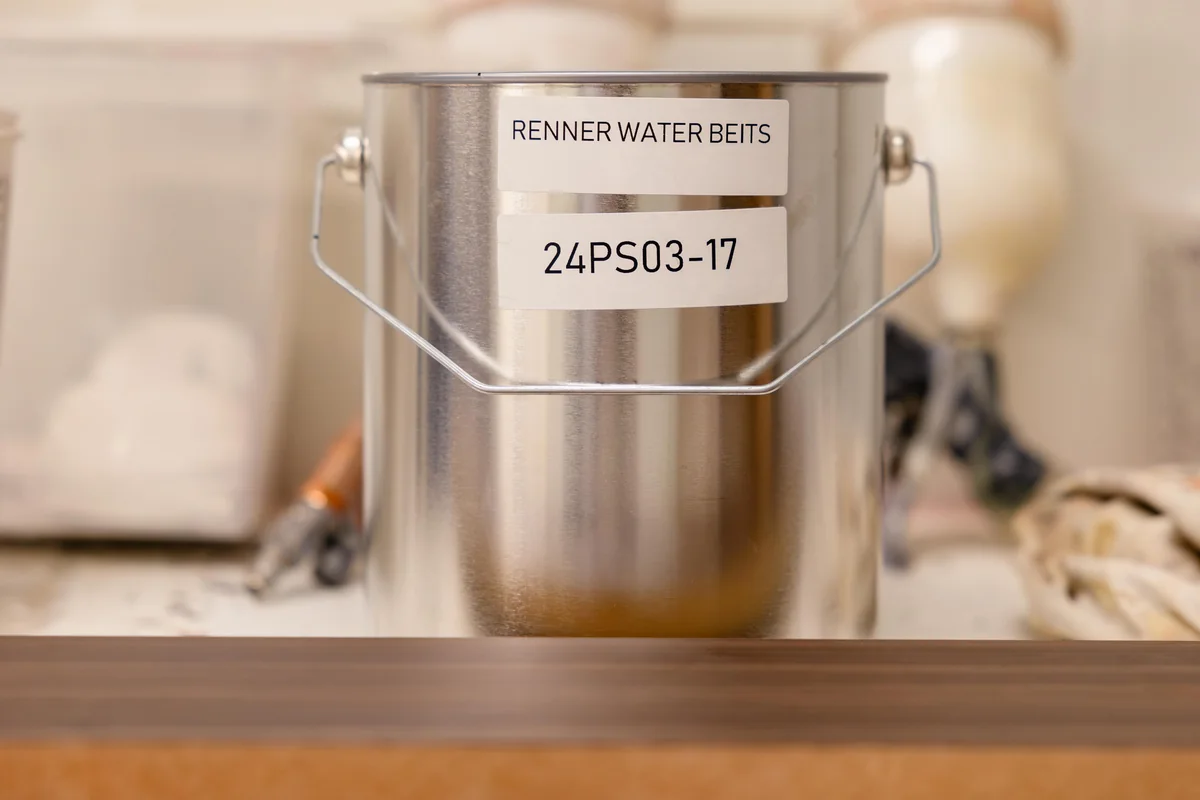
This classification is too simple. A large manufacturer may offer strong general systems, while a specialist product may suit a particular substrate or appearance better. We assess adhesion, build, colour stability, resistance, drying, system compatibility, documentation and repairability.
What really makes the difference?
- adhesion to the specific substrate or existing coating;
- filling power, solids content and required film build;
- pigment quality and colour stability;
- scratch, moisture and chemical resistance;
- UV and light resistance;
- susceptibility to yellowing;
- working time, drying window and full cure;
- compatibility between primer, colour coat and finish;
- technical documentation and traceability;
- consistency between batches;
- repairability and long-term availability;
- emissions, VOCs and available water-based alternatives;
- technical support from the manufacturer.
Material is only one part of the price, but a poor product choice can cause the entire finish to fail. The lowest price per litre is therefore rarely the lowest total cost. At the same time, not every project needs the most expensive system: suitability for the application is Morvena’s starting point.
Product and process form one system
An excellent coating on a poorly sanded, contaminated or unstable substrate still gives a poor finish. Mixing ratio, viscosity, drying time, film build and climate directly affect performance.
Workshop, equipment and skill also determine the result
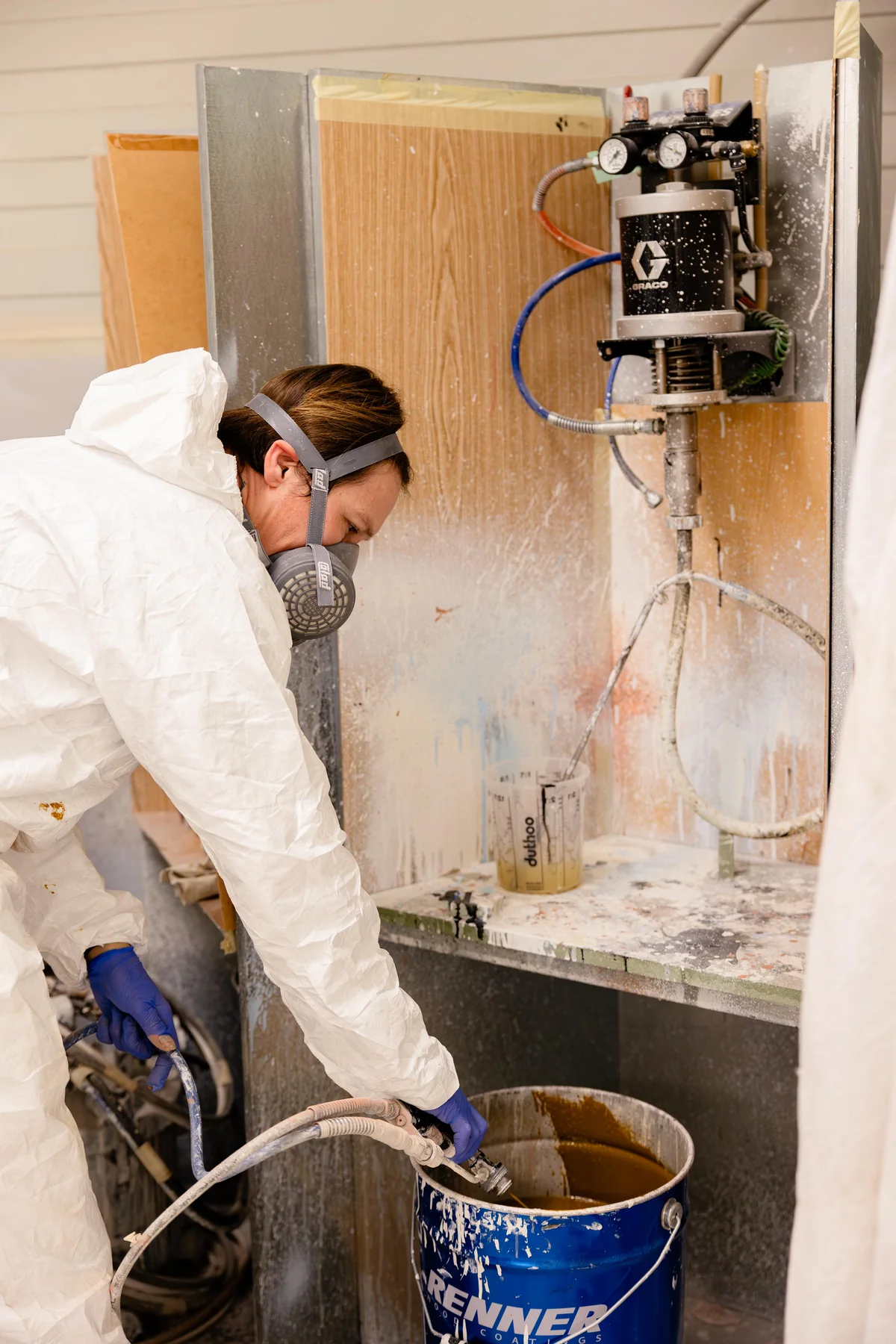
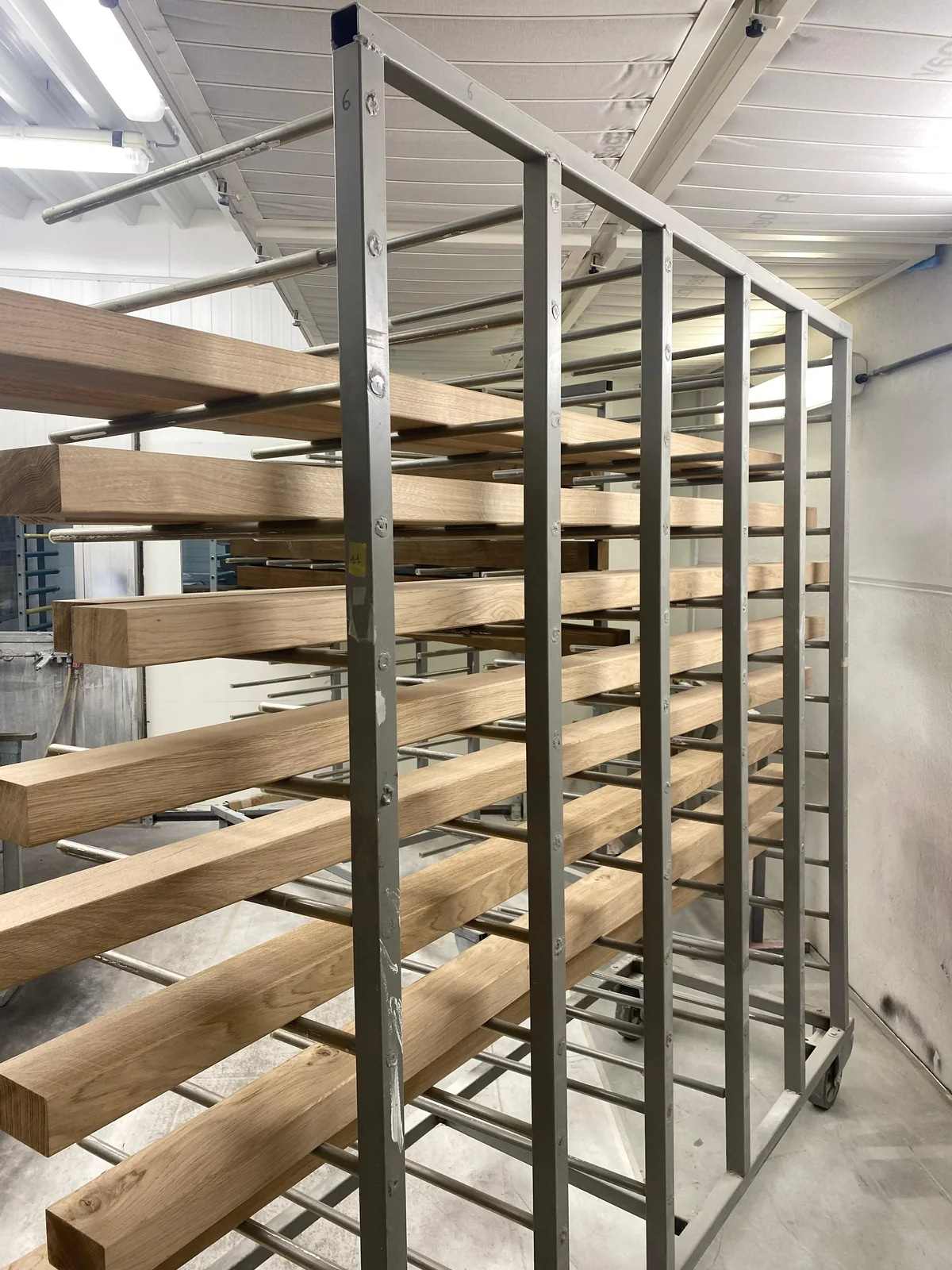
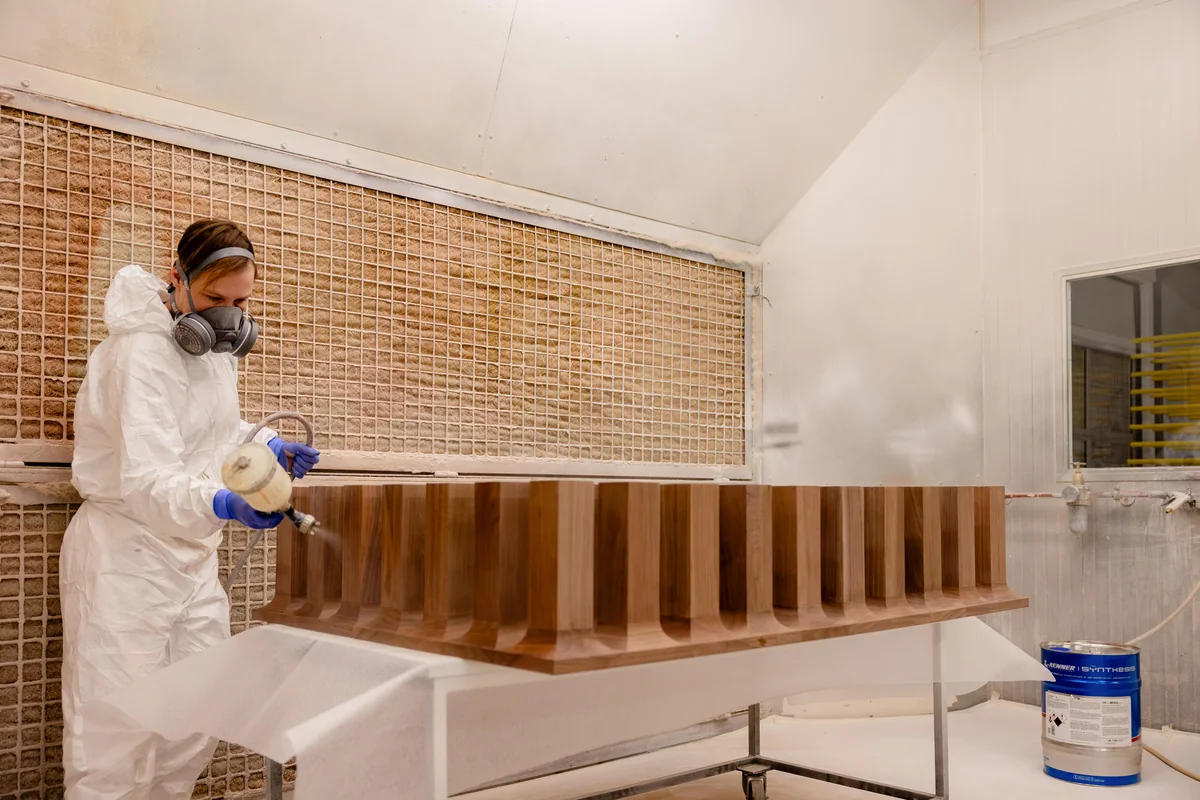
A well-filtered spray booth controls airflow, dust and overspray. A suitable sanding bench and effective extraction produce a consistent sanding pattern without contaminating the coating area. Heating, a controlled drying room and proper drying racks stabilise temperature, airflow and support while parts dry and cure. Well-maintained pumps and spray guns provide consistent material delivery and atomisation.
Well-trained and experienced lacquerers and sprayers adjust viscosity, pressure, fan pattern, distance, speed and drying time to the product, substrate, shape and conditions. They recognise deviations early enough to prevent them recurring across a complete production run.
Metallic lacquer demands added control
Metallic lacquers require added discipline in preparation, atomisation, overlap, film build and finishing: lighting, spray pattern and the orientation of effect pigments immediately affect the appearance. The handling of metal powders, binders, curing, sanding, patination and protection also comes into play. The lacquerers Morvena assigns to Vulkan applications have completed specific training, are certified in the technique and apply the method to the needs of each project.
Purchase price and total cost
A small saving on material quickly disappears through an extra coat, slower sanding, more rejects or premature repair. Morvena compares the complete process and expected service life, not only the purchase price.
Morvena chooses
Our selection starts with the substrate, use and required performance. Within those criteria, we work in particular with:
| Real-metal finish |  |
|---|---|
| Coating systems |          |
| Oils and wood care |   |
| Abrasives and preparation |    Granat |
| Application equipment |    |
Sustainability and health
We continuously assess where waterborne, low-emission, bio-based or more transfer-efficient systems make sense while meeting the required performance. Longevity, safe application and repairability remain decisive.
Gloss level is both a technical and aesthetic choice
Ultra-matt, matt, satin and high gloss respond differently to light, touch and use. Lower gloss looks calm but may show fingerprints or burnishing. High gloss adds depth and colour intensity while revealing dust, scratches and substrate irregularity more readily. The right level therefore follows from design, use, maintenance and achievable surface quality.